Applying for a PhD, the NHS, the Civil Service or a Scholarship? Your CV Is Read Differently
Sam · 27 November 2026 · 3 min read
A job advert, a PhD project, an NHS person specification and a scholarship's selection criteria look similar on the page. They are read very differently. A PhD panel wants to see research potential and the methods the project needs. An NHS shortlister scores you line by line against the essential criteria. A Civil Service panel marks behaviours, with a word limit. A scholarship committee checks eligibility before it reads a word of your essays.
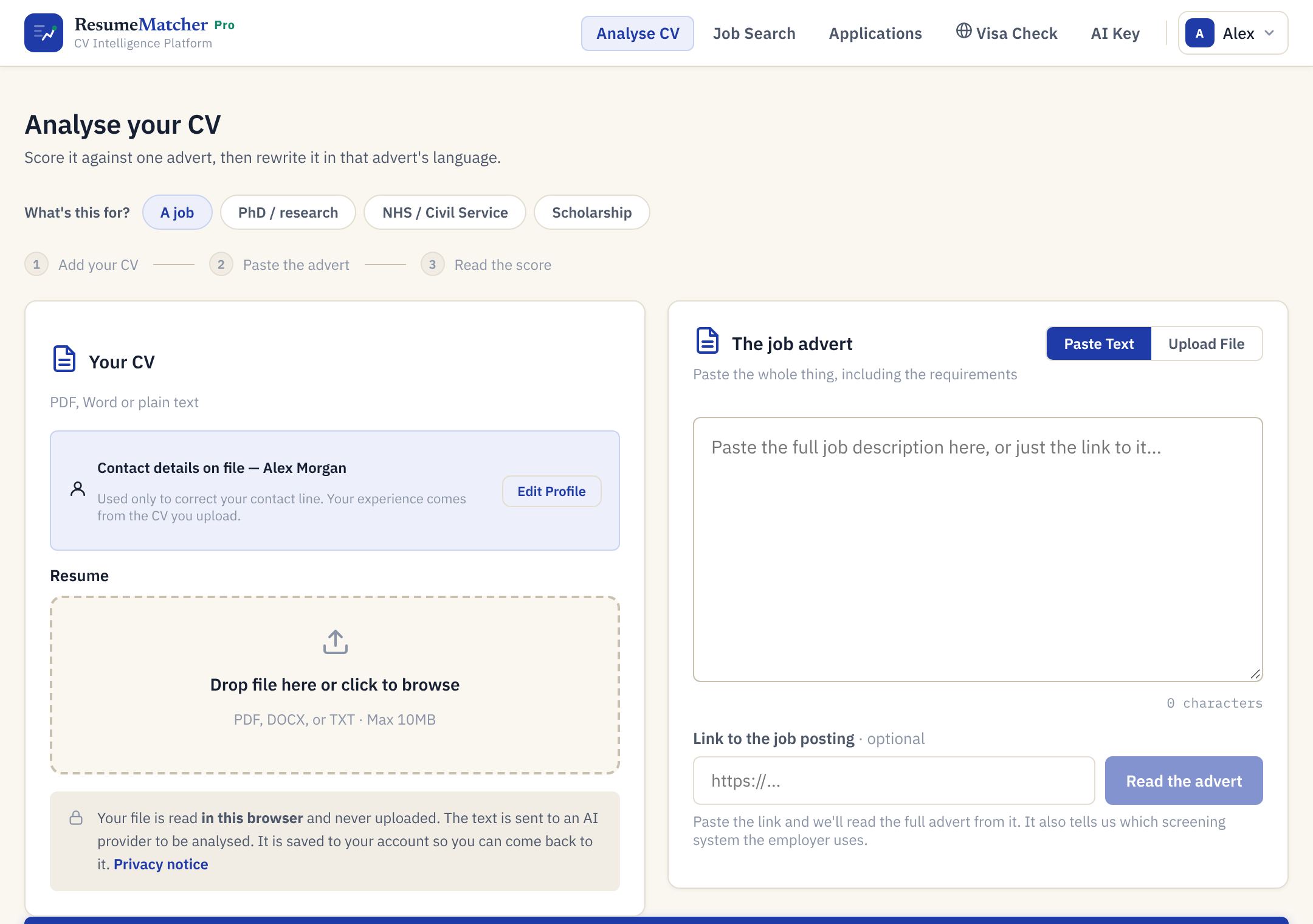
RMP used to read everything as a job. Now the Analyse page starts by asking What's this for?: a job, a PhD or research post, an NHS or Civil Service role, or a scholarship. Each choice reads the advert its own way.
PhD and research
Choose PhD and RMP reads the advert as a project: the methods it uses, the subject knowledge it needs and the degree it asks for. Your CV is rewritten as an academic CV, with education first, then research experience, and your publications and awards kept. The score is shown as your research fit.
One rule applies to every rewrite, and matters most here: RMP never adds a publication, presentation, award, funding or referee that is not in the CV you uploaded. If the AI writes one in, it is taken out before you see it.
From the results you can write a research statement and a short first email to a prospective supervisor about the project.
NHS and Civil Service
Choose NHS / Civil Service and RMP reads the person specification: the band or grade, the essential and desirable criteria, and any Civil Service behaviours. Results lists each essential criterion with a tick where your CV uses the terms that show it. That is a word check, and the page says so. A missing tick means "make this easier to find", not "you don't have it".
From there RMP writes the document the application asks for: NHS supporting information set against the person specification, a Civil Service personal statement kept under the advert's word limit, and behaviour statements, one example per behaviour and each under 250 words. Behaviour examples use only the steps your CV actually describes. In testing, the usual STAR format pushed the AI to invent meetings and feedback, so the instructions now forbid it.
Civil Service Jobs builds its adverts in your browser behind a bot check, so a link alone can't be read. The link box offers Send to RMP, a bookmark you press on the advert in your own browser. It brings the advert's text into Analyse without RMP ever fetching Civil Service Jobs itself.
Scholarships
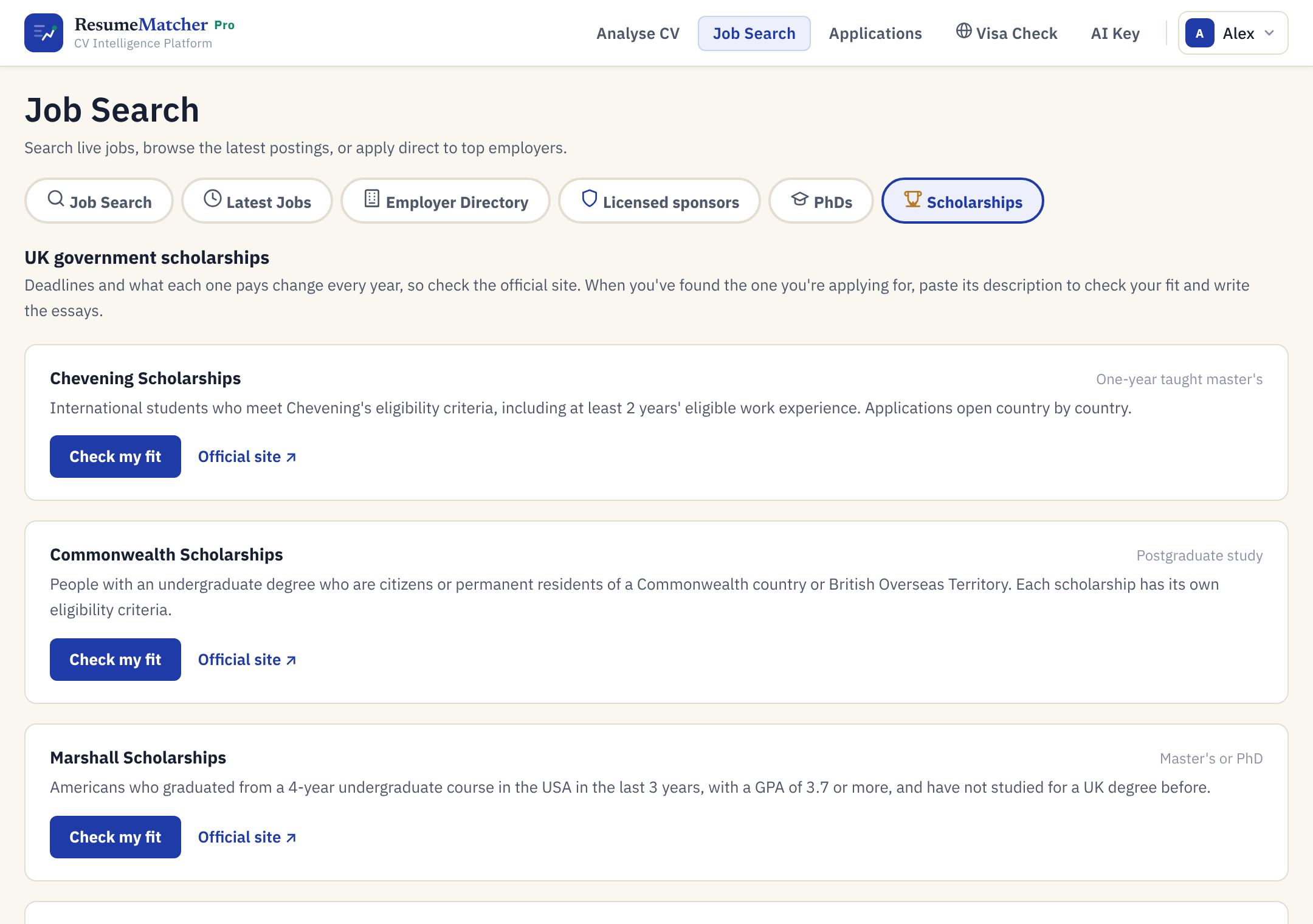
Choose a scholarship and RMP reads its selection criteria, its eligibility rules, its essay questions exactly as written, any word limit and the deadline. Results ticks the selection criteria against your CV and lists the eligibility rules for you to check yourself, because a CV can't show citizenship or residence. If the scholarship asks questions, RMP writes one answer per question, headed by the question, within the word limit. If it doesn't, you get a scholarship personal statement instead.
Statements for study
The Statement page, beside the cover letter, now writes a Statement of Purpose for international and postgraduate applications, a UK personal statement for postgraduate courses, and a UCAS personal statement for undergraduate entry, answering its three questions in 4,000 characters. Each is written in full from your CV and your own words, with nothing left in brackets for you to fill in.
Finding them, and practising for the interview
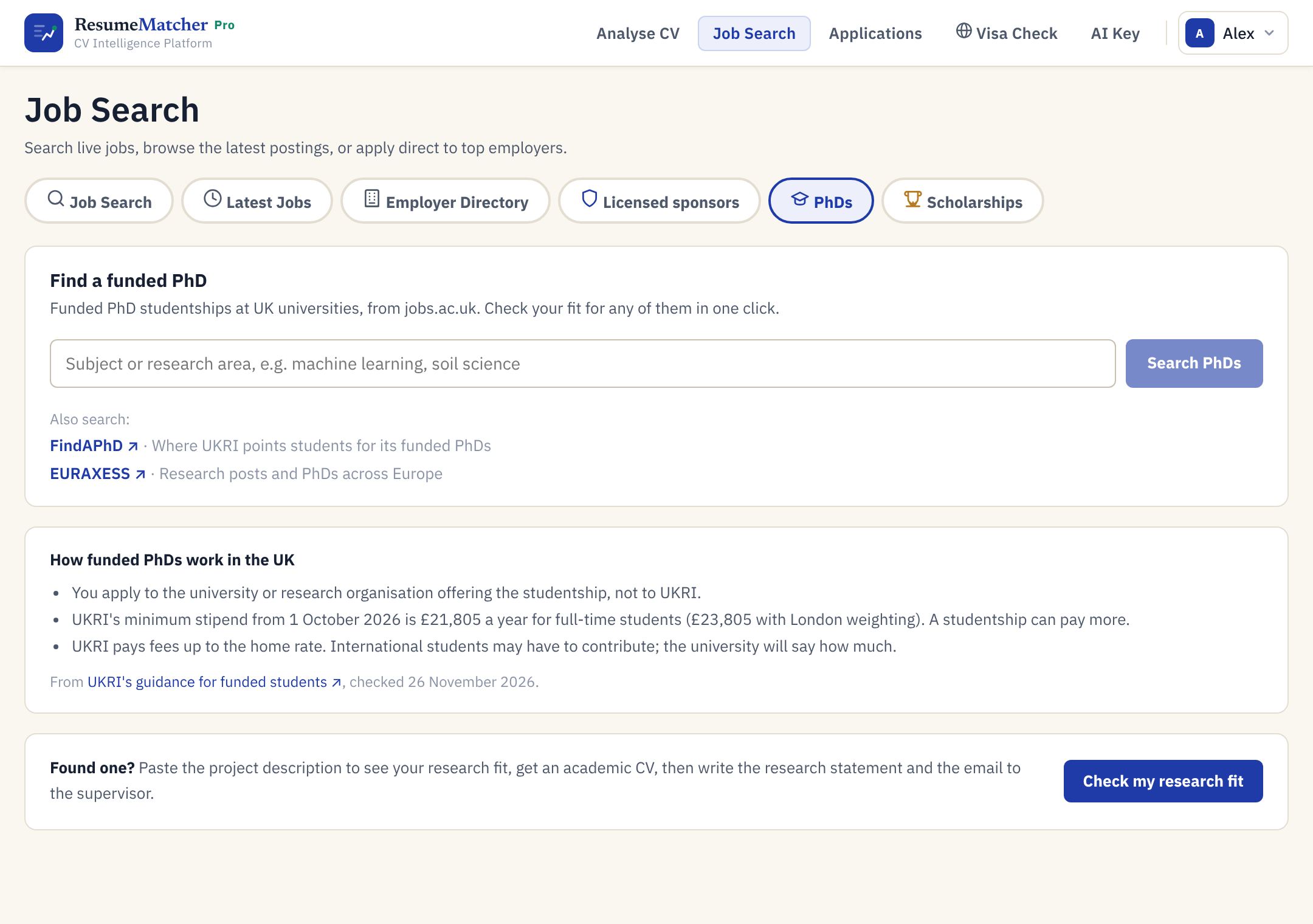
Job Search has two new tabs. PhDs and Scholarships list PhD studentships for a subject from jobs.ac.uk, and Check my fit opens Analyse with the advert ready to read. When you get the interview, Prepare for this interview opens PrepMe with questions written for that kind of panel: your own research and the project's methods for a PhD, the NHS values and each essential criterion for the NHS, a question per behaviour for the Civil Service, and leadership and plans for a scholarship.
Share this
A PhD panel, an NHS shortlister and a scholarship committee each read your application against something different. RMP now asks what you are applying for and reads the advert the way they will.
Post on X Share on LinkedIn